
Each empire's strengths and liabilities are based on the historical realities of 1714, the starting point of the game. Any empire can win, but the strategies that work best for one could be disastrous for another. Your success depends on making the best use of your strengths and exploiting your rival's weaknesses.
The United Kingdom is on the rise.
Fresh off major gains in the War of the Spanish Succession, Britain has secured Gibraltar, expanded its influence overseas, and forced its rivals to recognize British claims in North America. The foundations of a global empire are firmly in place, even if its full potential has yet to be realized.
Britain’s future won’t be decided on land alone. Control of the seas — trade routes, colonies, and distant territories — will determine whether this young empire becomes dominant… or overextended.
Can you turn naval supremacy into unquestioned global power?
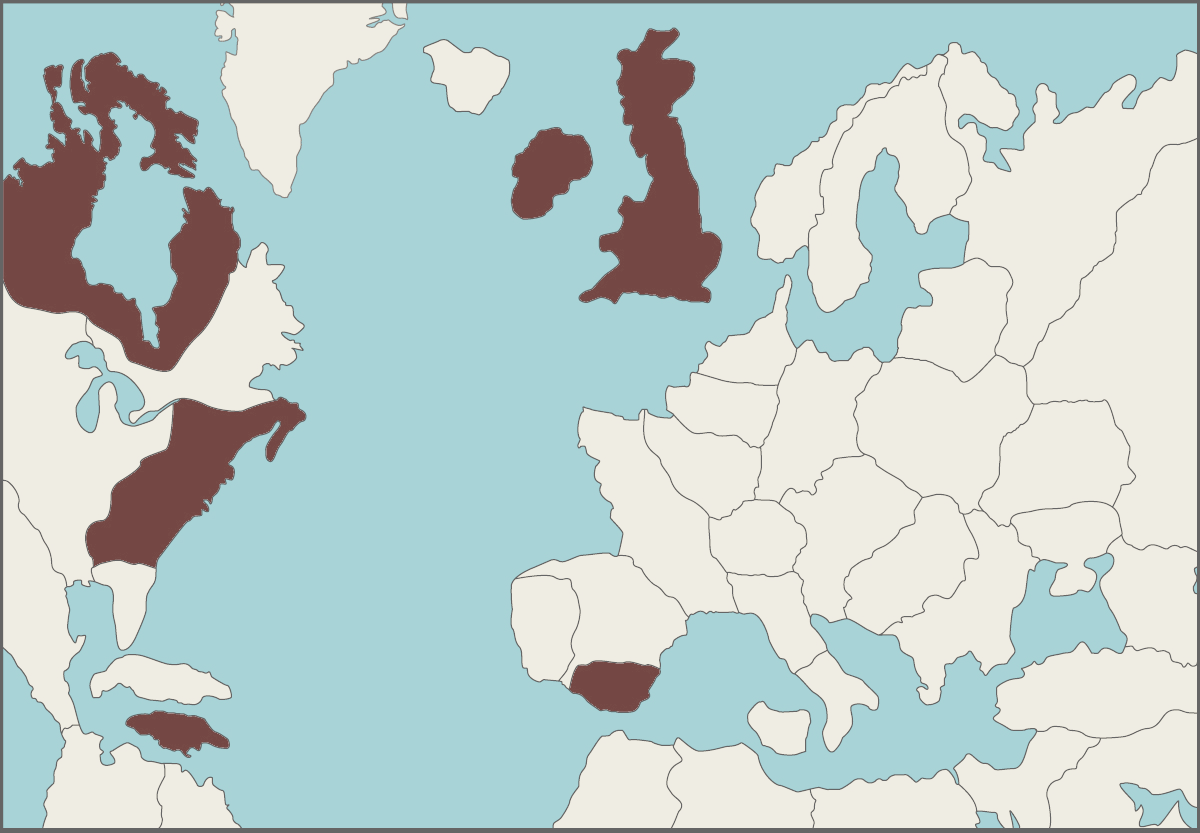
United Kingdom - British Colonies - Ireland - Jamaica - Gibraltar - Rupert's Land
Playing the UK is about reach, flexibility, and naval dominance.
You begin the game with the strongest navy, giving you the ability to strike almost anywhere and react faster than your rivals. The downside is a relatively small army and territories scattered across the map. If your control of the seas slips, defending your far-flung empire becomes extremely difficult.
Britain rewards players who think globally, move decisively, and know when to leverage naval power to dictate the pace of the game.
France is strong, proud, and surrounded.
Louis XIV’s campaigns made France the most powerful land empire in Europe, but the War of the Spanish Succession proved that unchecked dominance invites enemies. United against it, the Grand Alliance forced France to retreat from its most ambitious claims.
By 1714, France remains formidable — but every rival is watching closely.
Can you reassert French dominance without triggering another coalition determined to bring you down?
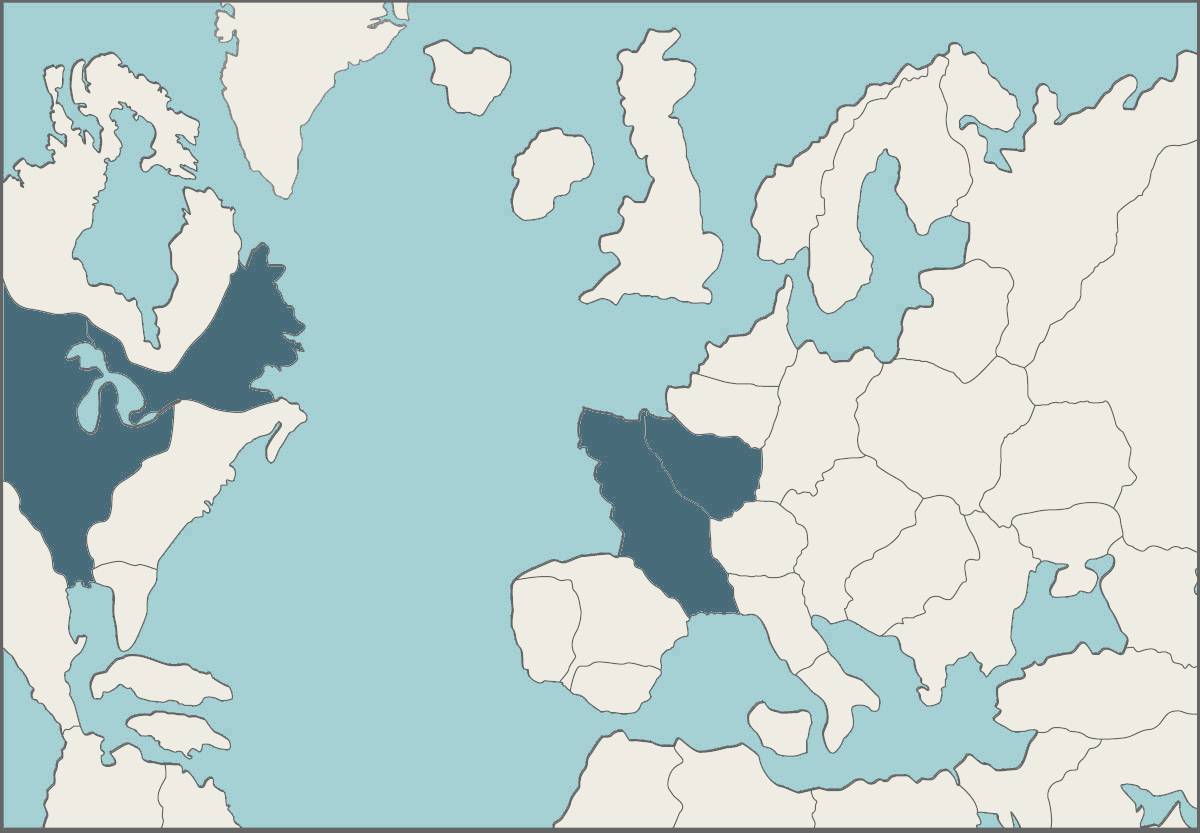
France - Champagne & Alsace - Quebec - Louisiana
France excels at early pressure and sustained military strength.
You begin with one of the strongest armies and a capable navy, giving you the tools to push aggressively in the opening turns. The challenge is geography — you share borders with more rivals than any other empire, and threats can emerge from multiple directions at once.
France rewards players who can anticipate attacks, apply pressure selectively, and avoid being drawn into too many conflicts at the same time.
Spain is at a turning point.
The death of King Charles II bound Spain and France under a single royal house, igniting the War of the Spanish Succession and plunging Europe into chaos. The aftermath was brutal. Spain was forced to surrender key territories — Gibraltar, Naples, and the Spanish Netherlands — accelerating the decline of what was once the world’s most powerful empire.
By 1714, Spain still commands immense wealth in the New World, but its European influence is fragile and its naval dominance has faded.
Can you reverse Spain’s decline before your rivals finish carving it apart?
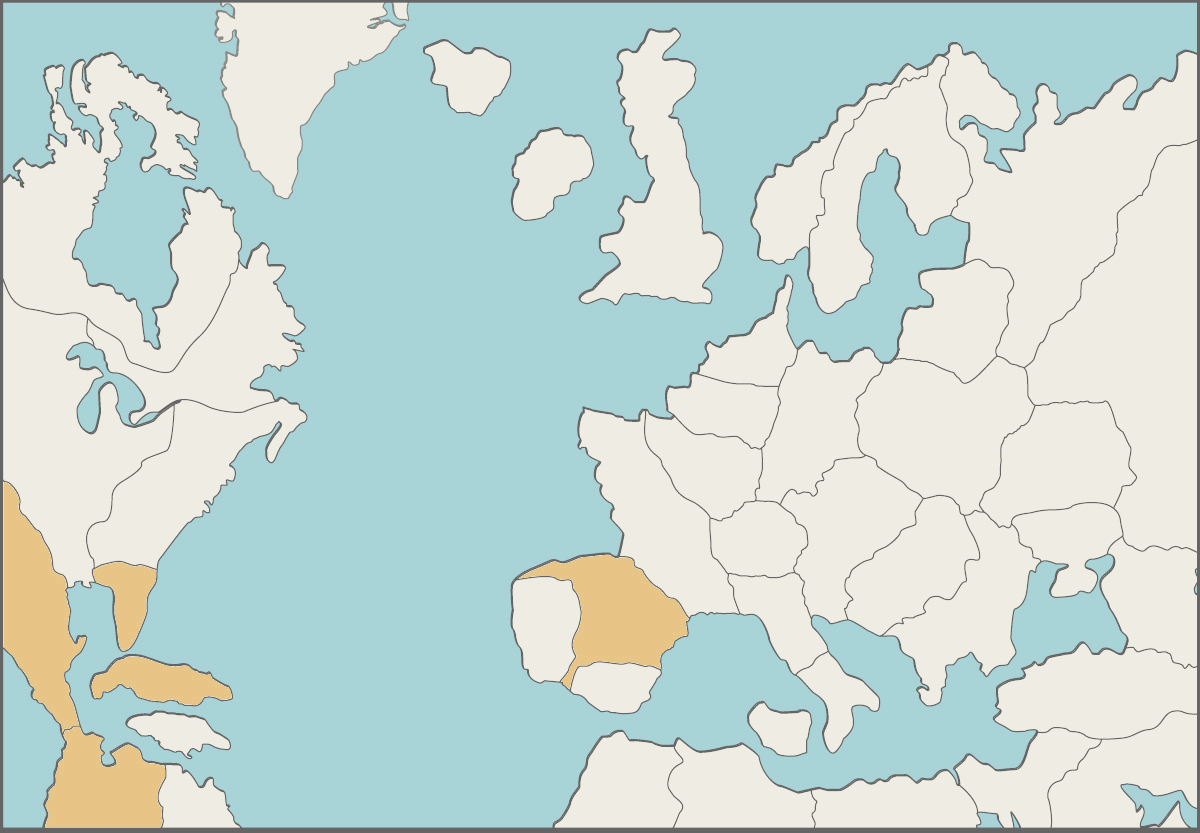
Spain - New Spain - Caribbean - New Granada - Florida
You begin with unmatched strength in the New World, giving you resources, reach, and long-term potential that no other empire can match. But your European position is vulnerable, and your fleet is weaker than those of your rivals across the Atlantic. If your sea lanes are cut, your empire quickly becomes fragmented.
Spain rewards careful planning, smart diplomacy, and well-timed naval investment. Expand too aggressively in Europe and you risk collapse. Ignore the Old World entirely and your rivals will seize the initiative. Success comes from choosing the right moment to strike — and knowing when survival is the real victory.
Spain isn’t the easiest empire to play, but in the hands of a patient, strategic player, it can become one of the most powerful forces on the board.
Austria stands at the center of Europe — and under pressure from every direction.
For decades, the Habsburg Empire has been locked in near-constant conflict, fighting France in the west and the Ottomans in the east. These wars have drained resources, strained loyalties, and weakened Austria’s traditional influence over the German States, many of which are now asserting their independence.
At the same time, recent acquisitions in the Netherlands and Naples have expanded the empire beyond its historic borders, bringing new wealth, new cultures, and new problems. Austria is larger than ever, but also more vulnerable.
By 1714, the question facing Austria isn’t whether it can expand — it’s whether it can hold everything together long enough to reclaim its position as the dominant power in central Europe.
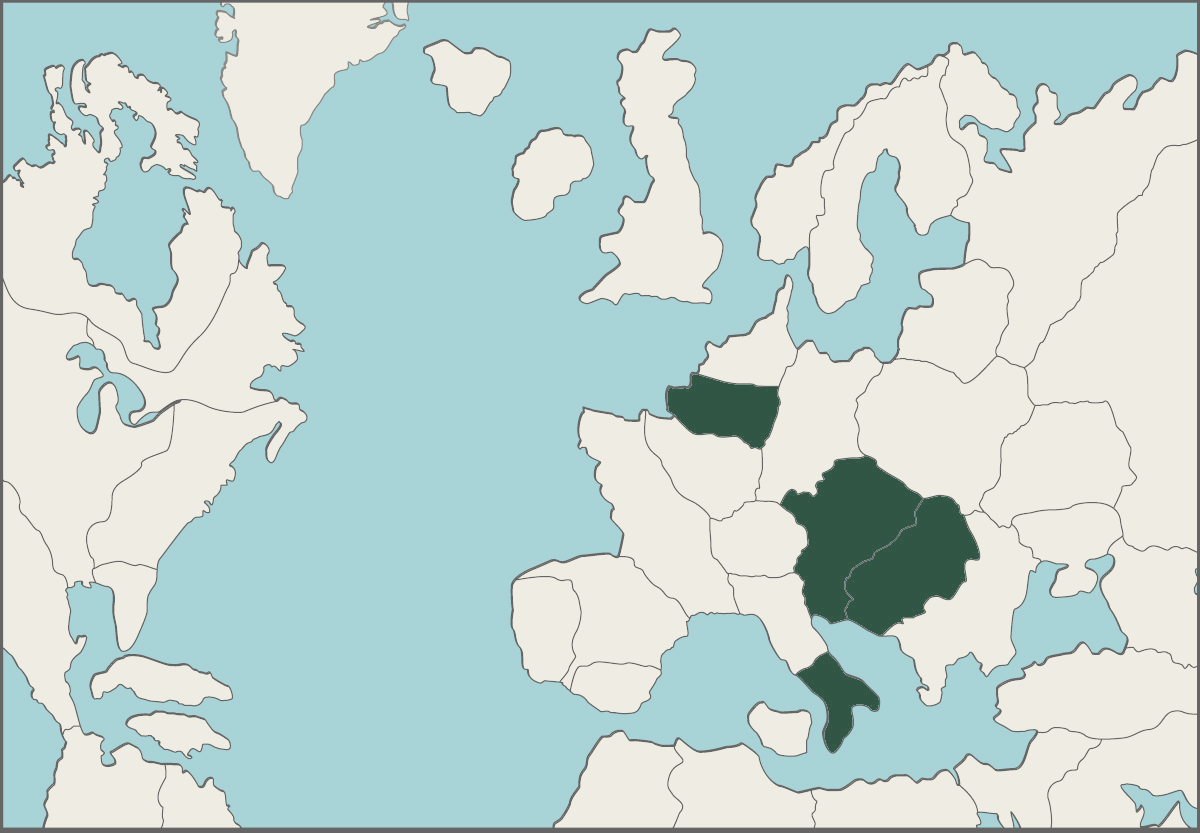
Austria - Hungary - Netherlands - Naples
Playing Austria is about control, positioning, and survival in a hostile neighborhood.
Your central position gives you unmatched flexibility. You can expand in almost any direction, react quickly to shifting threats, and influence conflicts across the map. But that same position means you’re exposed on all sides, with few natural buffers and multiple rivals watching for weakness.
The Netherlands and Naples offer valuable opportunities — and dangerous liabilities. They’re wealthy, strategically important, and difficult to defend if your enemies coordinate. Austria rewards players who think diplomatically, build alliances early, and choose their battles carefully.
Austria isn’t about flashy early victories. It’s about steady pressure, smart defense, and knowing when to turn a defensive position into an unstoppable advance.
In the right hands, Austria becomes the empire that holds the board together — until it doesn’t need to anymore.
For centuries, the Ottoman Empire expanded almost without resistance, pushing deep into Europe and dominating the eastern Mediterranean. By the early 1700s, that momentum had finally slowed.
Defeats at Vienna and Zenta marked a turning point, exposing cracks in what had once seemed unstoppable. Ottoman borders are still vast, its armies formidable, and its influence undeniable — but rivals have learned that the empire can be challenged. To the north,
Russia is rising. To the west, European powers are growing bolder.
By 1714, the Ottoman Empire is no longer expanding by default. Every gain must be defended, and every mistake is costly.
Can you restore the sense of inevitability that once defined Ottoman power — or will the empire be contained by a changing world?
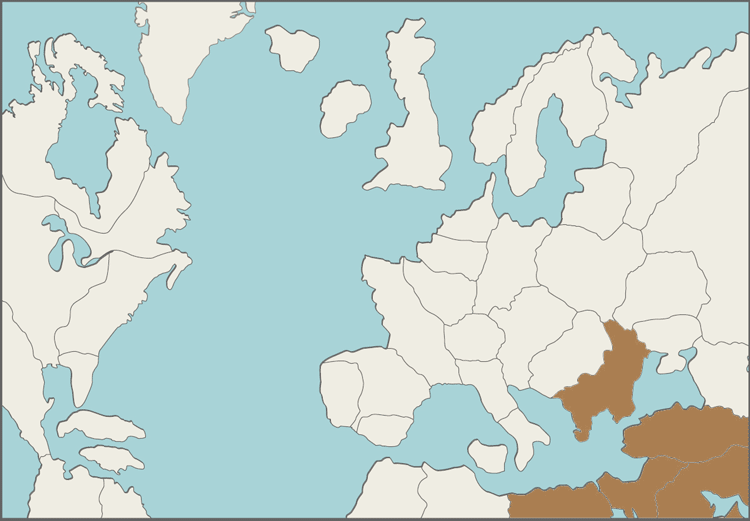
Rumelia - Anatolia - Egypt - Persia - Syria
The Ottoman Empire is about early choices, momentum, and controlled expansion.
You begin the game with territories that are relatively insulated from immediate attack, giving you a rare window to decide how you want the game to unfold. That breathing room is your greatest strength — and your greatest risk.
Expand too slowly, and rivals will surround you. Push too hard in the wrong direction, and you may overextend before you’re ready to defend your gains. The Ottomans reward players who commit early, pick a clear direction of expansion, and apply steady pressure before the map closes in.
Ottoman players who hesitate often find themselves trapped. Those who act decisively can become one of the most dangerous empires on the board.
Russia is the newest major power — hardened, ambitious, and determined to be taken seriously.
Under Peter the Great, Russia fought its way onto the European stage during the Great Northern War, securing access to the Baltic Sea and breaking Sweden’s dominance in the region. These victories reshaped northern Europe and signaled that Russia was no longer an isolated giant.
By 1714, Russia has momentum, territory, and a population ready to support expansion — but much of Europe still views it as untested. Russia’s future depends on whether it can turn early gains into lasting power.
Can you transform Russia from a rising challenger into an empire no one can ignore?
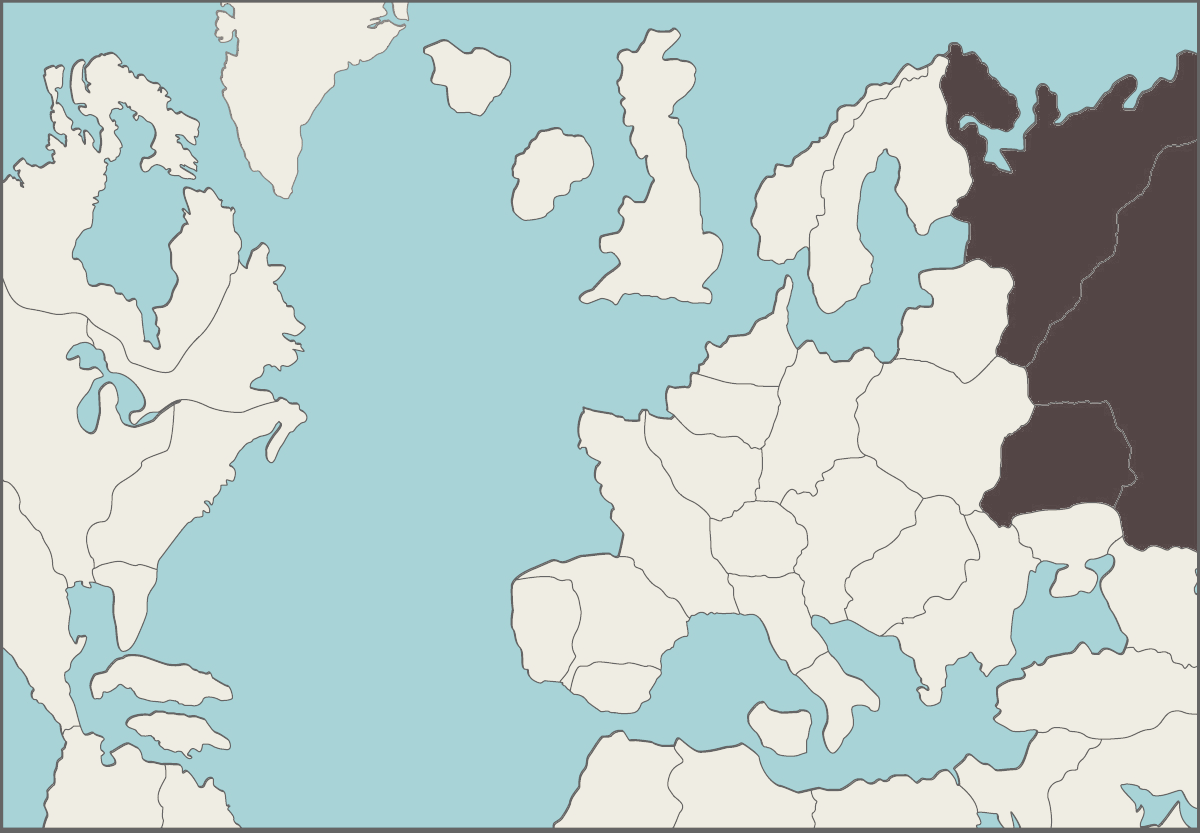
Ingria & Karelia - Muskovy - Ukraine
Russia is about patience, resilience, and inevitable pressure.
Your starting territories are some of the easiest to defend in the game, allowing you to absorb early shocks that would cripple other empires. This makes Russia forgiving early on, but deceptively demanding over the long term.
Without a strong navy, your expansion will often be methodical rather than explosive. You won’t strike everywhere at once — instead, you’ll push outward step by step, forcing opponents to respond as your influence steadily grows.
Russia rewards players who think long-term. If you survive the early game intact and build methodically, your strength compounds, and stopping you later becomes increasingly difficult.
In the late game, Russia doesn’t need to rush. It simply keeps coming.
